
Cacao in Hawaiʻi does not follow the pattern most people expect from a farm. There is no single harvest window, no quiet winter, and no moment when the trees stop producing. On the North Shore of Oʻahu, pods ripen more or less continuously, which means harvest, fermentation and drying overlap all year.
Why Hawaiian cacao fruits all year
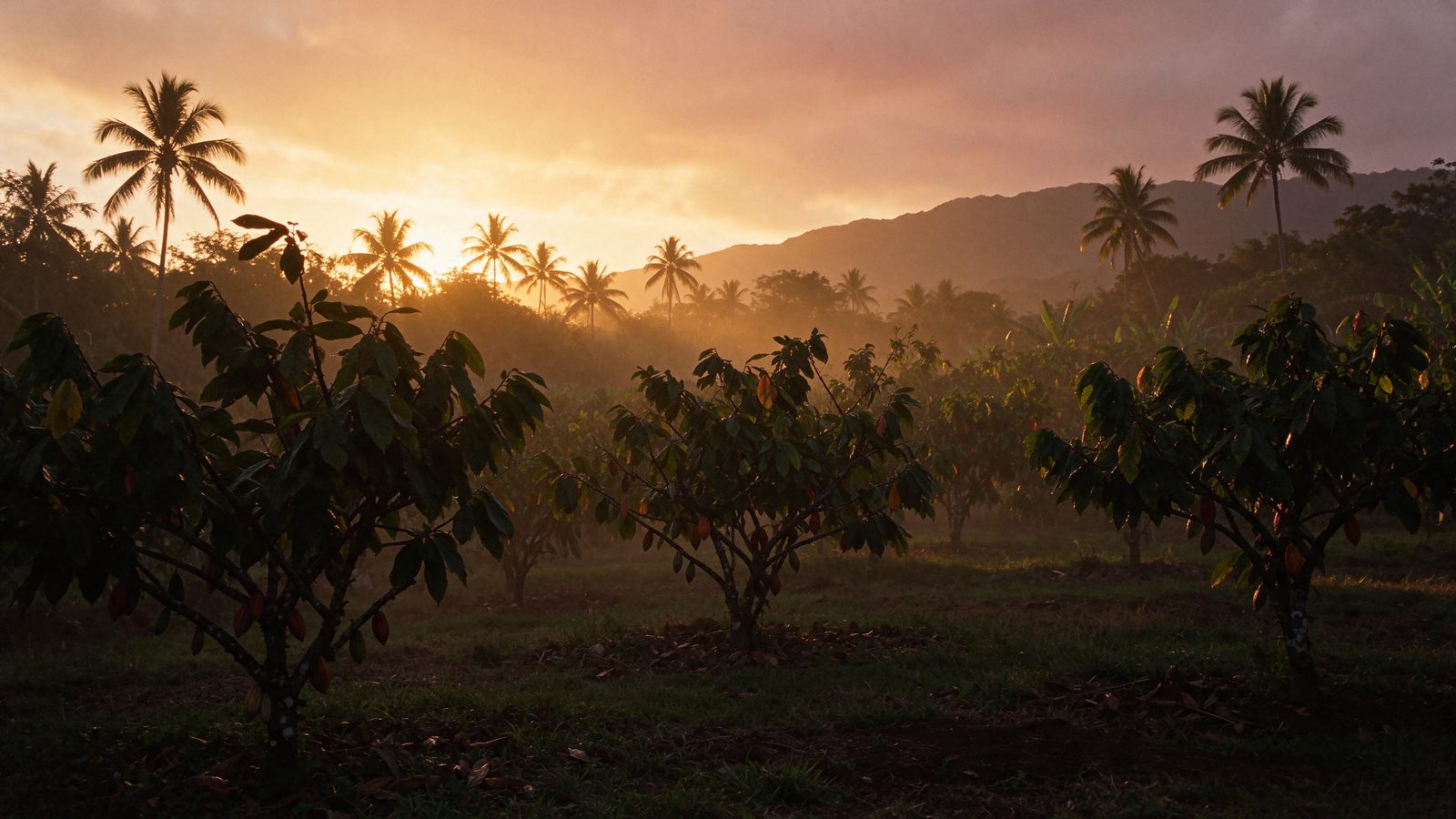
Cacao evolved in the equatorial tropics, where day length barely changes and the growing season never really ends. Hawaiʻi sits at 21 degrees north, close enough to the equator that the difference between the shortest and longest day is only about two and a half hours. Combined with warm nights and reliable rain in Waialua, the trees keep flowering and keep setting fruit.
That does not mean every month looks the same. Flowering comes in flushes, and a flush six months earlier is a harvest now. In practice the farm picks pods most weeks and has heavier and lighter stretches rather than a defined season.
What this means if you want to see fruit
Visitors often ask whether they are coming at the right time of year. For a cacao farm on Oʻahu, the honest answer is that there is almost always fruit on the trees — but not always on the same trees. A tree carrying ripe pods in March may be flowering in June and carrying again by September.
For a farm tour, the practical implication is simple: you can reasonably expect to see pods, flowers and developing fruit on the same walk, on the same tree, in any month. That is unusual, and it is one of the reasons a cacao farm is more interesting to walk than a single-crop orchard.
The two harvests that matter commercially
Even with continuous fruiting, most Hawaiian cacao farms see a heavier main crop and a lighter second crop. The main flush typically follows the wetter, warmer months; the lighter one comes after the cooler stretch. Exact timing varies by elevation, rainfall and the age of the trees, and a farm that tells you otherwise is guessing.
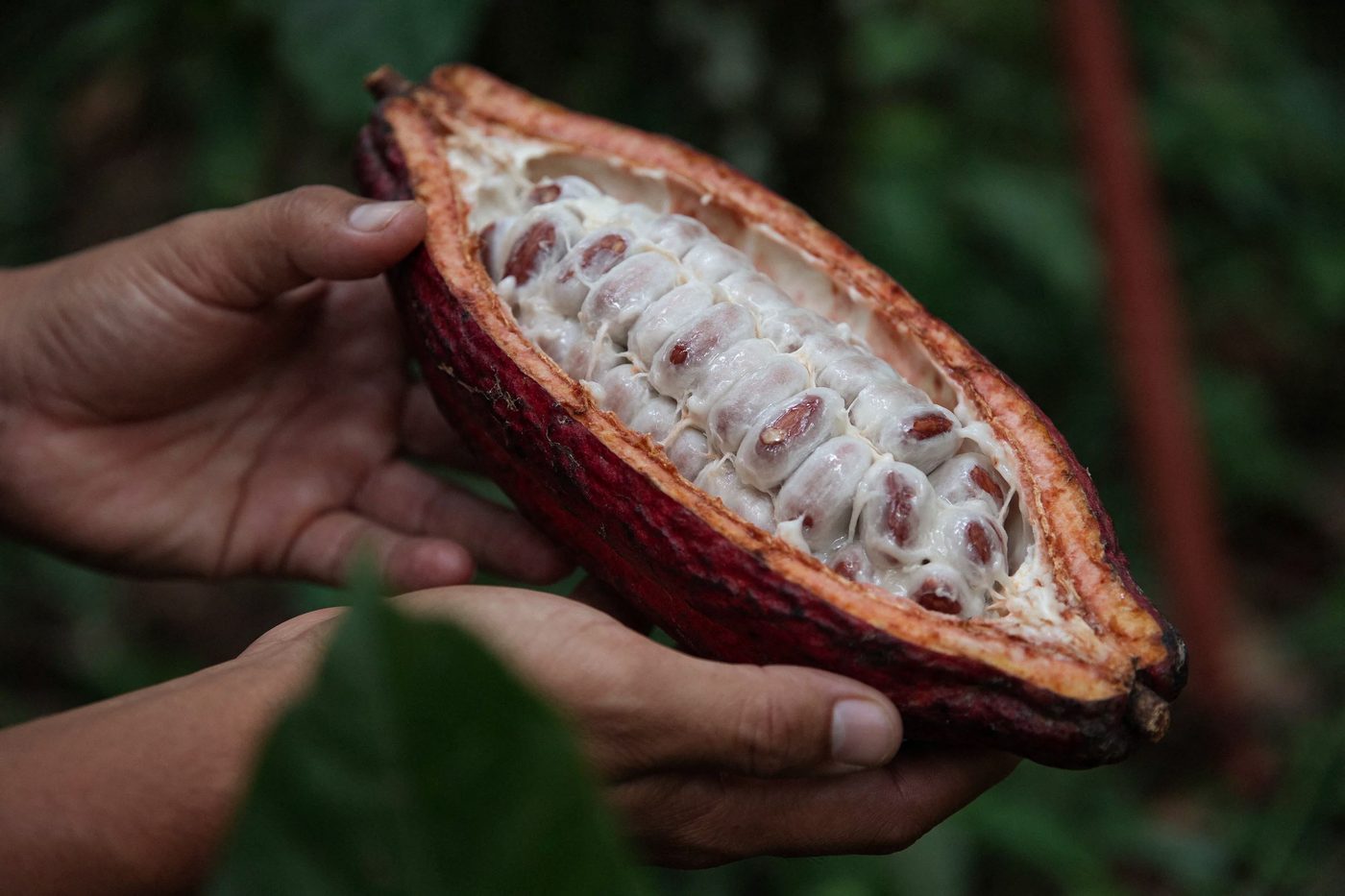
Because pods ripen unevenly, harvest is done by walking the rows with a knife and cutting only what is ready — a ripe pod every few trees rather than a whole block at once. It is slow work, and it is the reason small farms can produce consistently high-quality beans.
What happens after picking
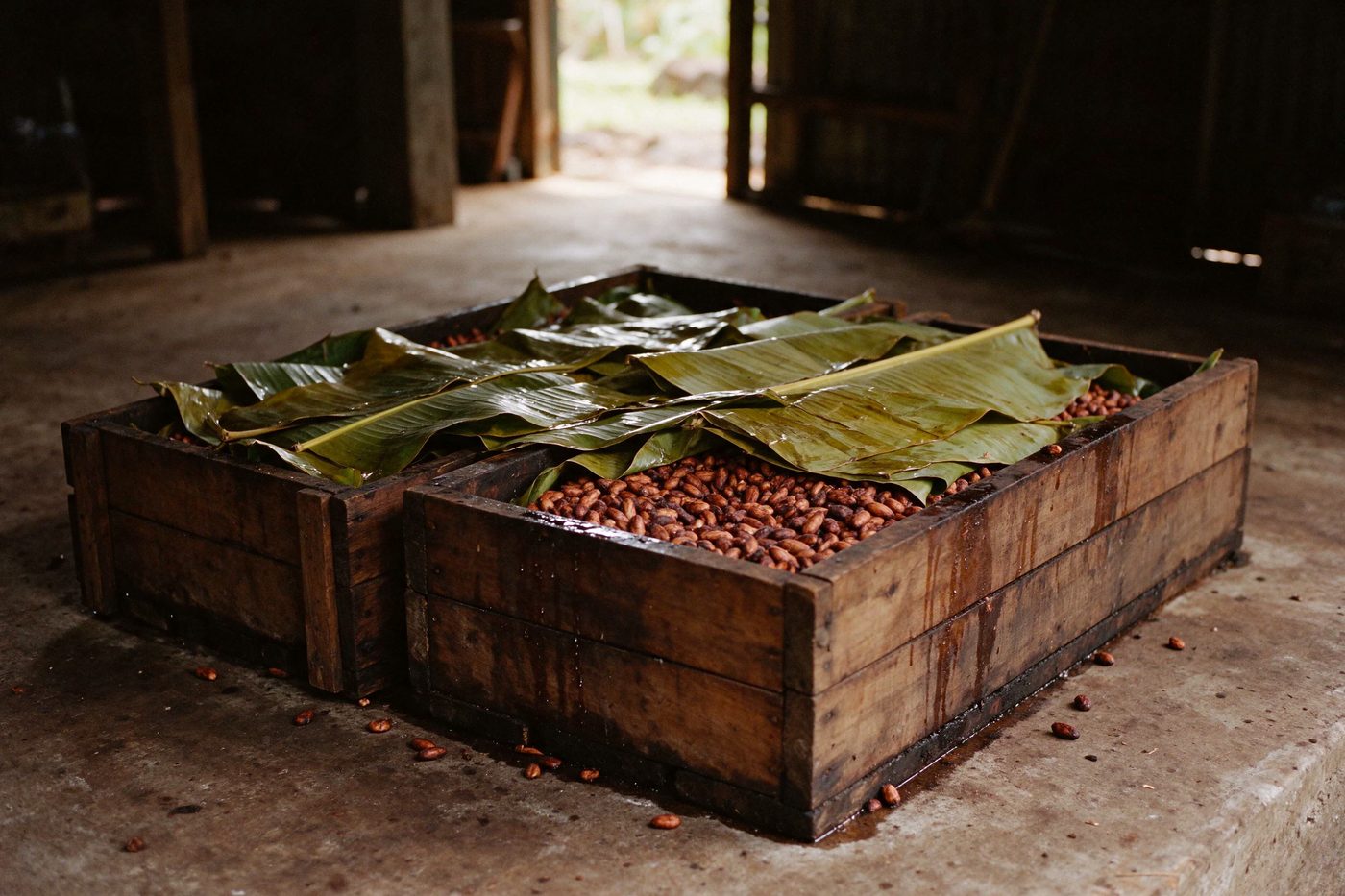
Pods are opened the same day they are cut. Beans and pulp go straight into wooden fermentation boxes, because the pulp is what feeds the ferment. Beans left in a bucket overnight lose the sugars that start the process and the batch suffers.
Six days later the beans go onto drying racks, and one to two weeks after that they are ready to roast. From a ripe pod to a finished bar is roughly three weeks, which is worth remembering the next time a bar seems expensive.
Visiting during a lighter month
If you are choosing dates specifically to see a lot of ripe pods, ask before you book. Any honest farm will tell you what the trees are doing that week, and a good guide will find fruit to open regardless. What you will not get, at any time of year, is a farm where every tree is loaded — that is not how cacao grows anywhere.