

- Home
- Tree to Bar
From tree to bar
Nine steps separate a pod on a trunk from a wrapped bar. Six of them happen before the chocolate exists at all.
Most of the flavour is decided before anything is roasted.
People assume chocolate-making is about recipes. It is mostly about time and temperature in the field: how ripe the pod was, how long the beans fermented, how slowly they dried.
Fermentation is the step that matters most. The pulp around the bean breaks down, the mass heats up, and acids and sugars change into the compounds that later read as fruit, raisin, molasses or cocoa. Cut fermentation short and the bar tastes flat and sour. Let it run and it tastes sharp.
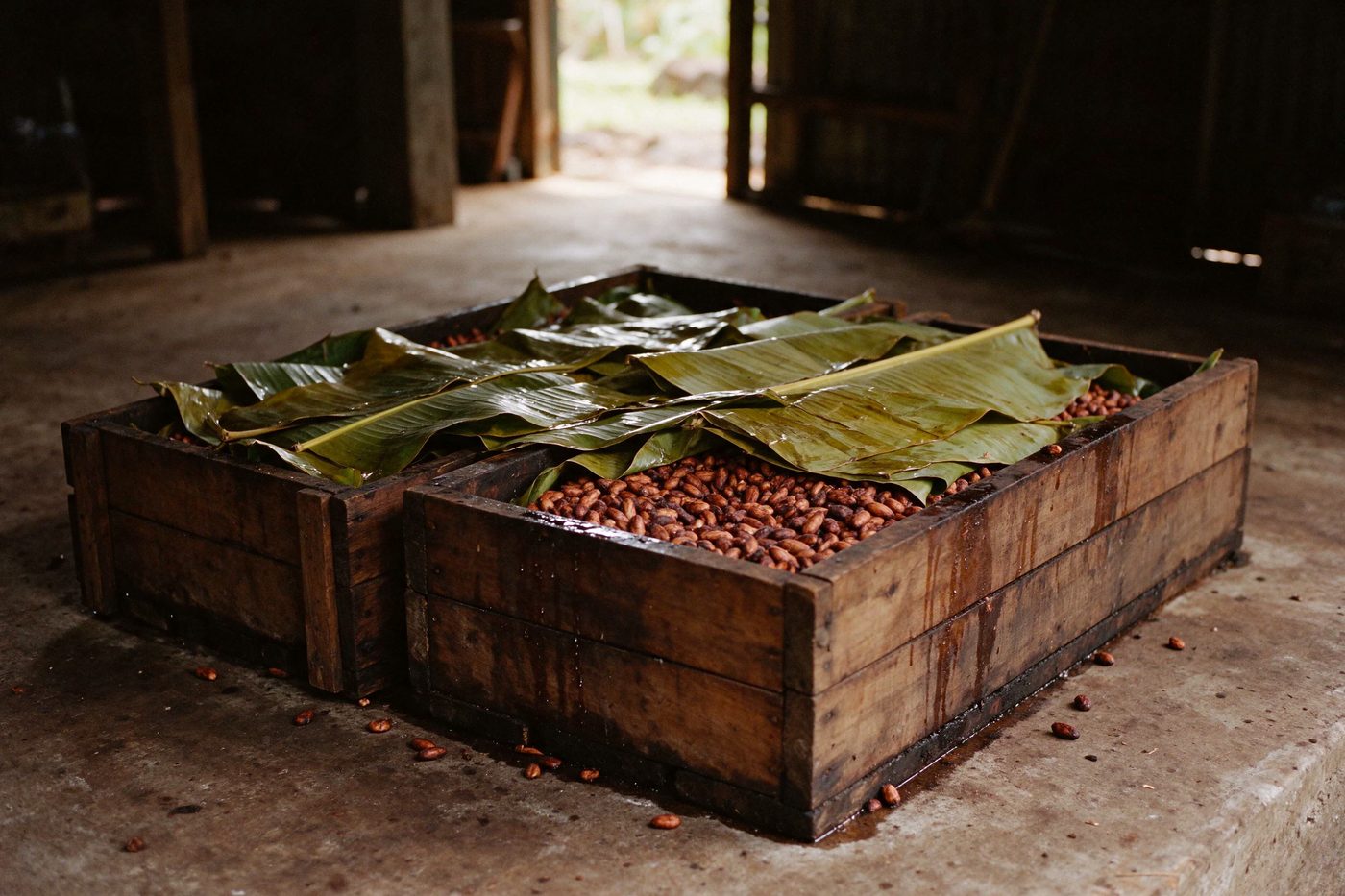
We ferment for six days in wooden boxes. Everything after that — the roast, the grind, the temper — is about not ruining what the fermentation gave us.
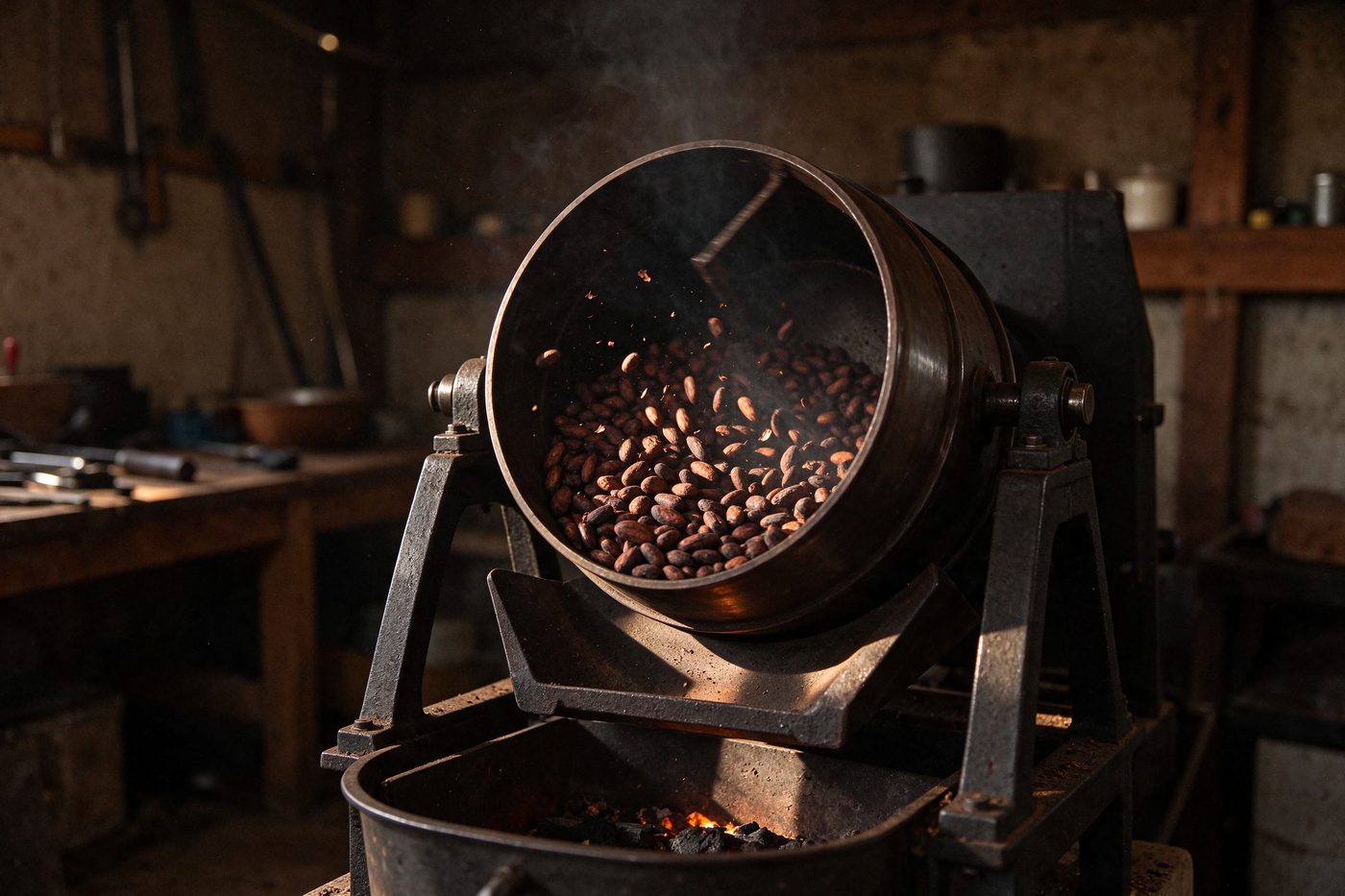
Pod to bar, in order.
-
01
Harvest
Ripe pods are cut by hand, opened the same day, and the beans and pulp scooped out. A pod holds roughly forty beans; a bar takes about a pod and a half.
-
02
Fermentation
Beans and pulp go into wooden boxes, covered with banana leaves and turned on a schedule for six days. This is where chocolate flavour is created — not in the roaster, not in the grinder.
-
03
Drying
Onto raised racks in the sun for one to two weeks, raked into shallow rows and covered when it rains. Beans are ready when they crack rather than bend.
-
04
Sorting
Dried beans are hand-sorted. Flat, mouldy, broken and double beans come out. What is left is what gets roasted.
-
05
Roasting
A drum roast to a set profile. Light roasts keep fruit and acidity; darker roasts build the brown sugar and cocoa notes most people expect from dark chocolate.
-
06
Cracking and winnowing
Roasted beans are cracked and the papery husks separated from the nibs. Husks go to compost; nibs go to the grinder.
-
07
Grinding
Nibs, sugar and nothing else go into a stone melanger and turn for one to two days until the particles are too small to feel on the tongue.
-
08
Tempering
The chocolate is heated and cooled to specific temperatures so the cocoa butter sets in a stable crystal form. Skip this and the bar looks dull, snaps badly and melts in the hand.
-
09
Moulding and wrapping
Poured into moulds, tapped to release air, set, turned out, wrapped by hand and labelled with the batch.
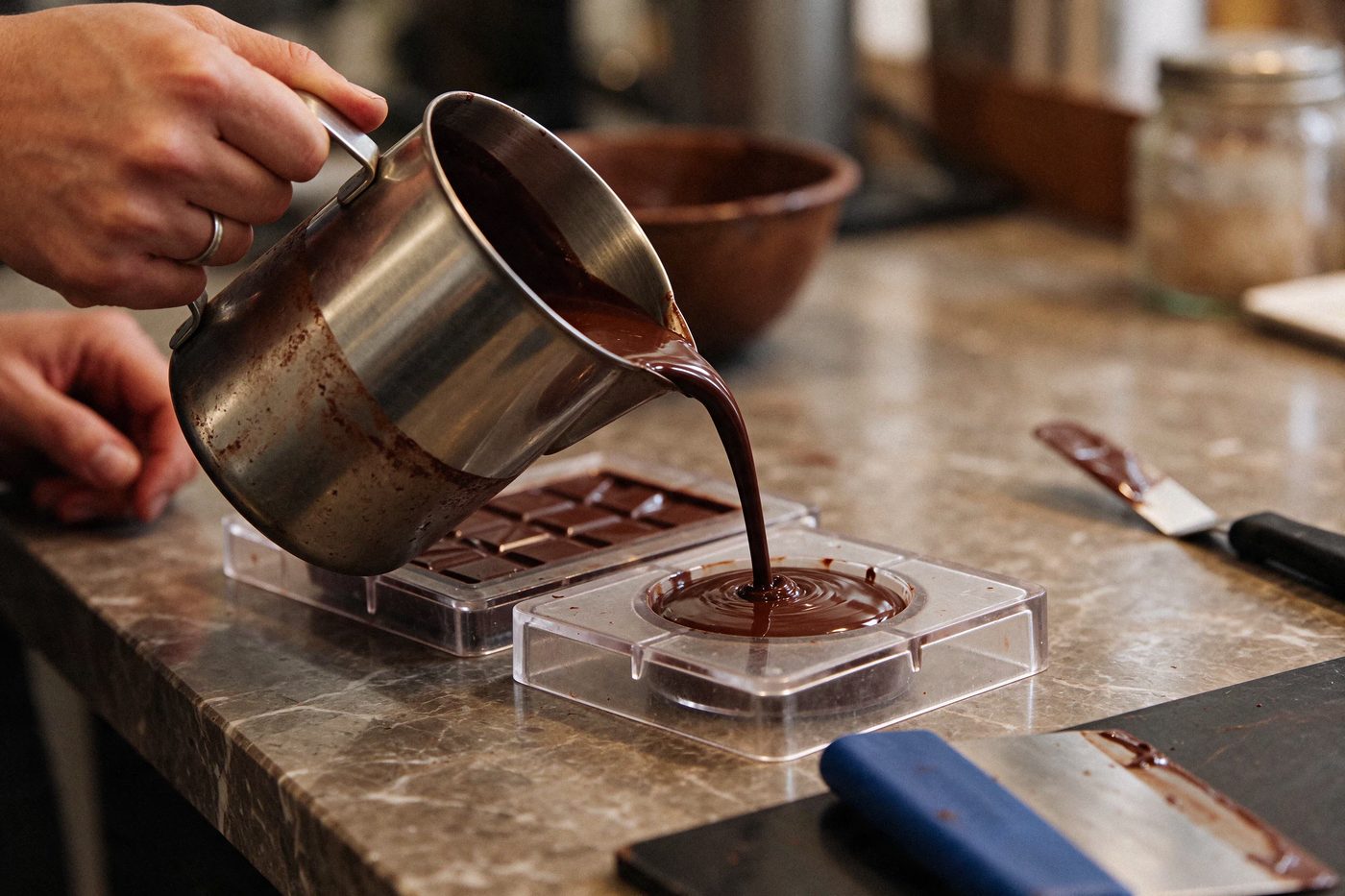
Cacao and sugar. Nothing else.
No added cocoa butter, no lecithin, no vanilla. The cocoa butter in the bean is enough if the grind is fine and the temper is right. Fewer ingredients means the farm has nowhere to hide.
It also means the bars change with the harvest. A bar from this month will taste slightly different from the same recipe six months ago, because the beans did. We think that is the point.
Questions about how chocolate is made
How long does it take to make chocolate from cacao?
About three weeks from harvest to wrapped bar at La Maison Cacao: six days of fermentation, one to two weeks of drying, then roasting, winnowing and one to two days of grinding before tempering and moulding.
Why does chocolate need to be fermented?
Fermentation removes the bitter, astringent compounds in raw cacao and develops the precursors of chocolate flavour. Without it, beans cannot be made into pleasant chocolate no matter how they are roasted.
What is bean-to-bar chocolate?
Bean-to-bar means the maker starts with raw cacao beans rather than buying pre-made chocolate, and controls roasting, grinding, sugar ratio and tempering. At La Maison Cacao the beans are also grown on the same farm, which is closer to tree-to-bar.
Does Hawaiian cacao taste different?
Yes. Cacao takes on character from soil, rainfall and the specific trees it grows from. Waialua beans tend toward fruit and molasses rather than the sharp acidity of some island origins.
Taste the difference the process makes.
The Tree to Bar Tasting compares six chocolates from the same farm, so you can taste what fermentation and roast actually do.
Or call (808) 282-4154 — James answers.