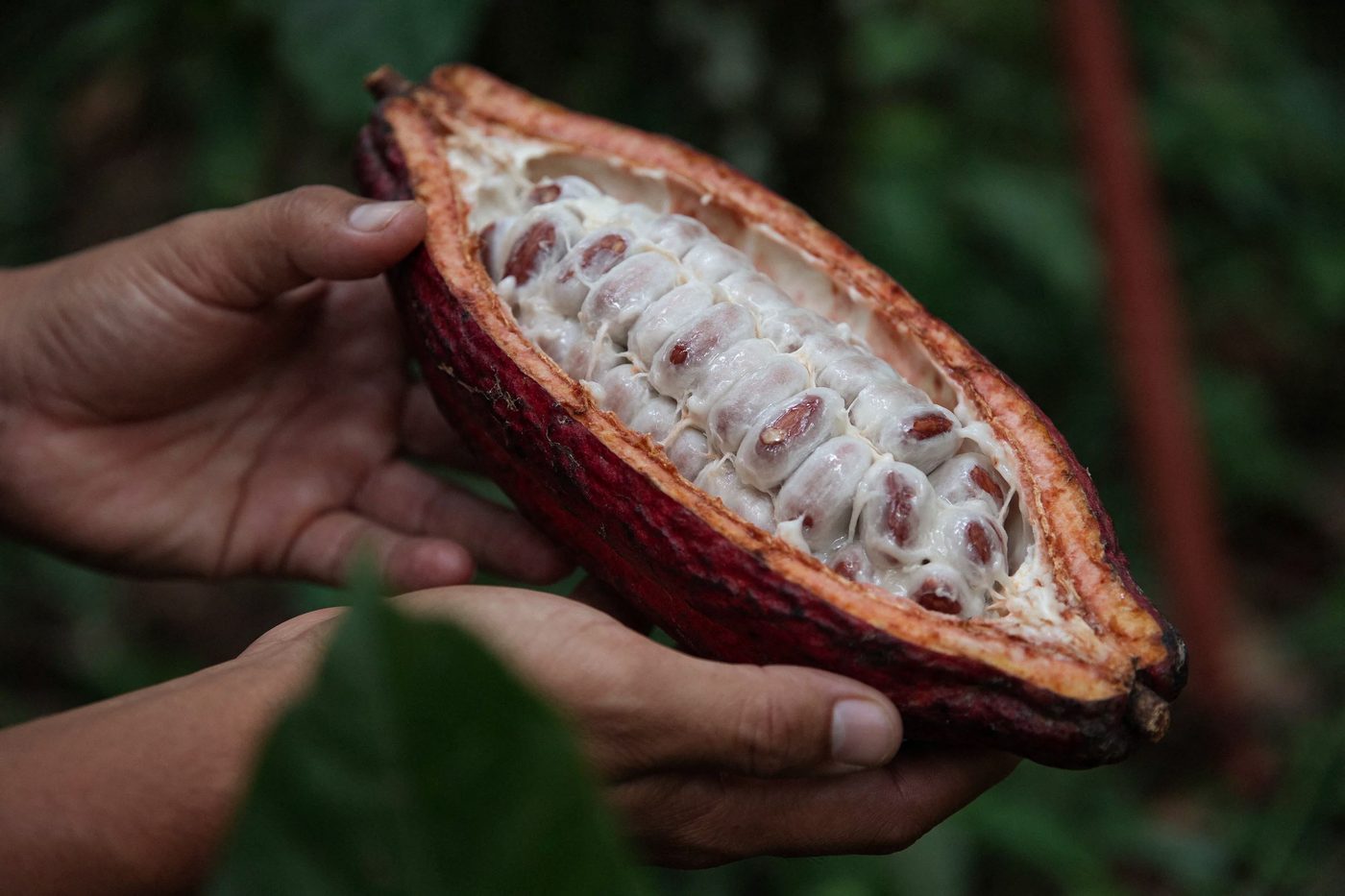

Every chocolate bar begins as a fruit. Not a flavour, not a powder — a pod the size of a rugby ball, growing out of the trunk of a tree, full of beans in white pulp. Turning that into something that snaps and melts takes about three weeks and nine distinct steps.
1. Harvest
Ripe pods are cut from the trunk and branches by hand and opened the same day. A pod holds roughly forty beans, and it takes about sixty beans to make a single 60 g bar — a pod and a half per bar.
2. Fermentation
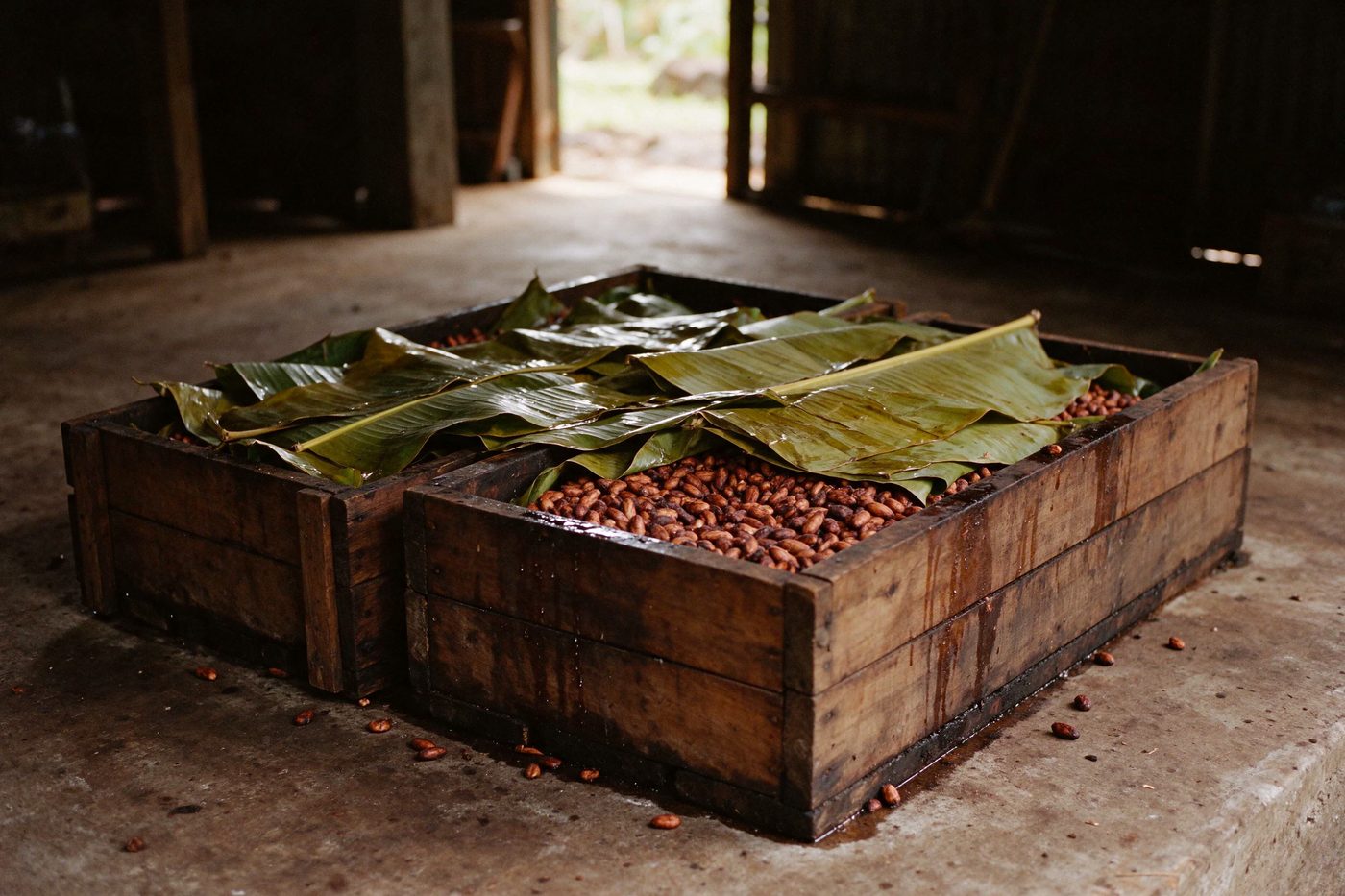
Beans and pulp go into wooden boxes, covered with banana leaves, and left to heat up. Over five to seven days the pulp breaks down, the temperature climbs above 45°C, and acids and sugars convert into the compounds that later read as fruit, raisin, molasses or cocoa. This is the single most important step in chocolate making. Cut it short and the bar tastes flat and sour; run it too long and it tastes sharp and vinegary.
3. Drying
Fermented beans are spread on raised racks in the sun, raked into shallow rows and covered when it rains. Drying takes one to two weeks. Too fast and the outside of the bean hardens before the inside is dry; too slow and mould gets in. Beans are ready when they crack rather than bend.
4. Sorting
Dried beans are hand-sorted. Flat beans, mouldy beans, broken beans and doubles come out. What is left is what gets roasted — sorting is unglamorous and it is where a lot of quality is won or lost.
5. Roasting
Beans go into a drum roaster to a set profile. Light roasts preserve fruit and acidity; darker roasts build brown sugar and cocoa notes. The roast does not create flavour so much as decide which of the flavours already present get to be heard.
6. Cracking and winnowing
Roasted beans are cracked and the papery husk separated from the nib. Husks go to compost; nibs go to the grinder. At small scale this is done with a machine and a lot of patience.
7. Grinding
Nibs and sugar go into a stone melanger and turn for one to two days. The goal is particle size: small enough that the chocolate feels smooth on the tongue rather than gritty. At La Maison Cacao there is no added cocoa butter, no lecithin and no vanilla — two ingredients, ground for a long time.
8. Tempering
Chocolate is heated and cooled to specific temperatures so the cocoa butter sets in a stable crystal form. Done properly, the bar is glossy, snaps cleanly and melts in the hand. Done badly, it looks dull, crumbles and blooms white within a week. This is the step that ruins most home batches.
9. Moulding and wrapping
Poured into moulds, tapped to release air, set, turned out and wrapped by hand. The bar is now chocolate, three weeks after it was a pod.
What changes the taste most
Fermentation and roast, in that order. Everything else is craft and consistency. If you want to taste what that means, a guided tasting that compares batches from one farm — same trees, different ferments or roasts — is more instructive than tasting bars from six different countries.